Energy bills, petrol, diesel, mortgages, heating oil, LPG & more. Martin's key tips & checklists to cut costs
The Middle East conflict has pumped up oil & gas costs. How to protect your pocket...
 Nothing we face compares with the threat to life of those directly affected by warfare in the Middle East, but people in the UK are still impacted. The oil price is up 35% since the conflict started at the end of Feb, flowing not just into obvious costs - petrol, diesel, heating oil - but also most goods we buy, as they need transporting, cooling, storing and more.
The price of gas, which affects energy bills, is up 70%. While its impact won't hit imminently, it is storing up bill rises for later this year. There is no magic wand that any consumer can wave to fix all this, yet there are things you can do to reduce the impact or the cost. Some nifty, others far from rocket science, so this is a mix of tips & checklists...
- Petrol & diesel checklist: 5 tips to cut the cost.
- Gas & elec bills: What to do if fixed, or on Cap / time of use / EV tariffs.
- Middle East travel chaos help
- Heating oil & LPG: New support?
- Mortgage ending soon: What do I do?
- What about inflation? And impact on student loans?
|
Easier to watch? Let me explain & answer your questions...
The Martin Lewis Money Show Live: ITV1, 7.15pm (Tue)
I'll go through the practicals on this on my show too, answer your questions and put some to the Sec of State for Energy about heating oil. Plus the usual News You Can Use. PS: Watch after via ITVX 'Martin Lewis'. |
Since the conflict started, the average price of petrol has leapt up by 10p/litre and diesel by 20p/litre. Not all-time highs, but the highest for a year on petrol, nearly two years for diesel. They're unlikely to drop in the foreseeable future unless the conflict ends or more shipping resumes in the Strait of Hormuz. So here's a quick fuel saving checklist...
- Find the cheapest filling station near you. Fuel prices can vary hugely even within a small area, eg in Newbury, within just five miles, prices range from £1.42 to £1.72 per litre. Use the site PetrolPrices.com to find the cheapest near you.
PS: The Govt's recently announced 'Fuel Finder' means forecourts are now mandated to feed their prices into systems such as PetrolPrices.com (which was doing this long before that).
- Get PAID to pay for your fuel... top cashback cards. Many spend £1,000s/yr on fuel, and you can recoup a touch of that by changing how you pay (you get cashback on other things too). Full info in top cashback cards, but in brief...
- Top Pick (credit card): If you've a decent credit score, the fee-free Lloyds' Ultra credit card pays 1% cashback on all spending - so £1 back per £100 spent - including fuel (though it can be beaten by Amex for higher spenders). So use it for all normal daily spending and some can be £100s up at the end of the year. It also has near-perfect exchange rates abroad and you get cashback on spending there too.
Yet only do this if you always pay the card off IN FULL each month, preferably by Direct Debit, so there's no 12.9% rep APR interest, or that costs far more than the gain. Also don't withdraw cash on it or bust the credit limit. Full help in our Lloyds Ultra review.
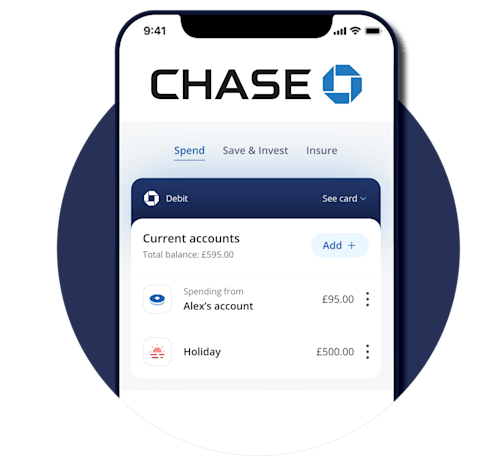 - Easy to get (debit card) & 4.5% savings interest: If you don't want a credit card, or doubt you'll pass the credit score, the free app-only Chase* bank account's debit card pays 1% cashback up to £15/mth, usually within days, but only on petrol, diesel, (non-household) EV charging, grocery and domestic transport spending.
Crucially, you don't need to switch bank account to get it, nor does it do a hard credit check, so most people are accepted. It also gives newbies the top 4.5% easy-access savings. Full eligibility in our Chase review.
- Think of your brakes as a money burner, and the accelerator as a money pump. The faster you accelerate, the more fuel you use. The more you brake, the more you burn off the acceleration you paid to generate. Being aware of your road position so you can safely speed up and safely slow down more gently, and shifting up gears sooner, can all have a dramatic effect on fuel efficiency. For more, see eight ways to drive more efficiently.
-
Too much junk in your trunk? Lighten the load. There are some easy ways to cut your car's fuel consumption, including removing roof racks, keeping tyres at the right pressure and clearing clutter from your car's boot (or elsewhere). It can have a bigger impact than you might think, especially combined with driving more efficiently. See our tips to make your vehicle more fuel efficient.
-
Got a Costco nearby? The giant wholesaler is often very cheap for fuel, coming cheapest on PetrolPrices.com in most areas it has a forecourt. So if you live near it, qualify for membership (£42/yr) - more do than think they will - and would shop there too, it can result in decent savings. Though expect queues. See our 17 Costco tips for more.
PS: Don't just accept 'same price' car insurance renewals. While we're talking motoring, March is one of the busiest car insurance months, so many are renewing. Be aware average car cover costs are DOWN 11% on last year. So if nowt's changed and your renewal isn't cheaper, don't just accept it. Use our Compare+ Car Insurance tool to see what's out there.
The domestic energy bills situation is more complex, because engineered into most of the system is a time-lag between wholesale costs rising and what you pay. In fact, in the short term, things look positive, but the issues start later. So let me start off with an explainer of where we are, then move on to common questions...
Please read these bullets before jumping to the Q&A below...
- The Energy Price Cap will get an avg 6.7% CHEAPER on 1 Apr. That then lasts until 30 June. The Cap dictates the price 60% of homes in Eng, Scot & Wales pay - those on their firm's standard default 'I haven't switched' or 'my fix ended & I didn't change' tariff.
It's unaffected by the Middle East conflict as a time-lag means the April Cap is based on Nov to mid-Feb's wholesale rates, which was before it started. The conflict will impact the next Price Cap which lasts July to September, analysts currently predict it'll RISE 16%, but as the assessment period lasts till May, without any other changes this could be far higher if the conflict's still on - or far lower if it ends soon.
- On a fix? It'll get roughly 7% to 9% CHEAPER on 1 April. Some policy costs on energy bills are being cut, or moved to general taxation, so unprecedentedly all bills - including existing fixes - will get cheaper. On most fixes, the electricity unit rate will drop 3.5p/kWh (often 13+% less) and gas 0.33p (often 6+% less). This will last until your fix ends. See how much will your fix drop?
- Most cheapest new fixes have gone, but a few still linger. The rate at which you can get a new fixed deal is based on current prices, so no surprise the cheapest have gone. Yet there are still some available up to 4% cheaper than the current Cap, and of course, they'll get cheaper on 1 April too (see above). So if you want certainty your bill won't rise, this is an option.
 To find your cheapest, use our Cheap Energy Club comparison. If you use other sites, make sure you click the tiny 'show all' button at the bottom or in the options, otherwise they hide tariffs that don't pay them, which some of the remaining fixes don't (we automatically show all deals by default).
Now let's go through circumstance-by-circumstance - there are no hard answers as the situation is too volatile.
Q. I'm not fixed, I'm on the Price Cap, should I fix now? If you're on a Price Capped tariff (see Am I on the Price Cap?), then do a comparison to see if you can get a fix for less than you currently pay. If so, you'll start saving straight away, you'll save more when your new fixes' price drops in April, and you'll be protected from the likely substantial July Price Cap rise.
The only risk is if the conflict ends soon - then it's likely at that point cheaper fixes will be available then than they are now. Having said that, a bird in the hand...
Q. My energy fix deal is ending soon, should I re-fix now? If you're in the last 49 days then the rules state you are free to switch without any early-exit penalties (if not, see next Q), in which case...
Do a comparison and see what's available. I suspect it'll show your cheapest is more than you pay now - but the real key is to find one that is less than what you'll pay on the Price Cap when your current fix ends (you'll be able to see that), especially if that date is close.
If so, and you're risk-averse (scared of big hikes), the safest thing to do is grab the cheapest fix now in case things get worse and they get even costlier, so you've no option but to go on the Price Cap. Yet be aware that if the conflict were to end soon, then you may've locked in at a higher price than you could've got by waiting.
If you are happy to ride it out and think things will be over soon, you could hold on until the last minute and see what fixes there are then.
Q. I'm on a cheap energy fix, but it has a decent time left, should I refix now? Without a crystal ball, there is no right answer here. You're on a cheap fix so are sitting pretty for now, and would likely need pay an early exit penalty to leave which adds to cost (the bigger your usage, the less of a proportionate issue that is). So let's play out the two key scenarios...
- The conflict ends soon: By waiting it out you will likely be able to get a much cheaper fix than you can now when your fix ends.
- The conflict drags on for many months and prices stay high: Your fix will end and there is a chance there will be no fixes cheaper than the Price Cap (which you'll move to if you do nowt). That Cap will almost certainly rise substantially in July, and then stay high in October.
If this is a nightmare scenario, you could look at paying the early-exit penalty and refix now for longer - though likely you'll be paying more to do so. On balance I'd probably not do that, unless you're very worried about unaffordability of rising prices.
Q. I got a cheap fix a month ago when you did the Collective switch? Great, you locked in far cheaper than you can now, and you've got at least 10mths left. You're sitting pretty, no need to do owt.
Q. I am on a rapid price change tariff - should I ditch it? The big two are Octopus' Agile (electricity price changes every half hour) and its electricity or dual fuel Tracker tariff (price changes every day). Generally, these are for sophisticated users who monitor prices, and with Agile, who shift usage patterns to match.
These tariffs are, by definition, volatile as they're based on wholesale rates for the day. Recently, Agile has had days where it's not much less than the price cap off-peak, with peak times far above it. Tracker is hovering above and below the Cap depending on the day.
If you're on one of these, hopefully you'll have a good idea of if it's right for you. Yet if you're thinking of ditching, beware you can't just come back when you like. With the Tracker you have to wait nine months before you can go back on it; Agile is 30 days. So, again, it's all a question of how long this lasts.
Q. I'm on a 'low Standing Charge' tariff? There are a number of Price Cap Tracker deals like EDF's Simply Tracker and British Gas Cap Tracker, where you get £50 or £100 cheaper Standing Charges for a year, depending when you signed up. While the discount runs, it's always better than the Price Cap, and tends to beat fixes for very low users. If you got one for the right reasons, its likely still your winner (though it may be worth looking at again in July).
Q. I'm on prepay, anything I can do? If you're on a Smart Prepay while there are no cheap fixes, there is the EDF Price Cap Tracker which is the Price Cap but with currently £50/yr cheaper Standing Charges, so an easy win for many. If you're on key or card meters, then unfortunately there is little or no choice. So if things get really rough from July, it may be up to the govt to look at whether it'll intervene.
Q. I'm on an EV tariff - what are my options? If you're on a fixed EV tariff, your rate won't change, but if you're on a variable one it might. Check with your supplier - it should give you 30 days notice of any price increases. And if an EV tariff was right for you before, it likely still is, see Cheapest EV tariff.
| Middle East Travel Chaos Help |
By far the most imminently hard-hit financially by the Middle East crisis are the c.1.5m people off the gas grid - in rural areas, Northern Ireland and Scotland - who use home heating oil or LPG. Prices have doubled or more for some. And as heating oil is bulk bought, if you had to do it in the last couple of weeks, this may have added £100s or £1,000s to the cost.
Last week I called for your feedback on this, and we had 1,000s of responses reporting poor practice. We've already submitted a provisional dossier of evidence right to the top in the Department for Energy Security and Net Zero, and also the Competition and Markets Authority (CMA), which is examining concerns too. As well as huge price hikes, we have been sent examples of...
- Firms cancelling orders and saying 'reorder at much higher price'.
- Firms reporting 'no stock' or refusing bulk quotes.
- Households offered only small containers at 5x normal prices.
- Households being told 'price on delivery' so no clue what they'll pay.
- Some people are switching off heating to preserve oil.
- Some people are under severe financial & emotional strain.
- There is a real risk for older, disabled and low-income households.
Since last week, the Government has announced new £53m targeted support to start 1 April for vulnerable households (we're scrambling for details on that, the link provides the latest updates). Plus it says it will at last look to regulate this market too (we've been calling for this for years).
Q. I'm struggling with this short-term, what do I do? I don't have any great solutions, so don't get any great hopes up with this answer- it's just a few thoughts. Of course, all the usual money makeover and budgeting routes are worth looking at, as are any possibilities of increasing income too...
-
Check for emergency support from your council or devolved government, especially from 1 April when the new support starts.
-
Ask neighbours or local community groups about clubbing together for a bulk order, as that can cut the per-litre price.
-
Do everything you can to avoid running the tank empty, as an empty tank may mean you need an engineer to restart it.
-
Temporarily switch to plug-in electric heating for a room, or even just for yourself if you can. And check out our Heat the human not the home guide for more on that.
-
That may help you preserve oil for hot water or limited heating where your system allows.
| My MORTGAGE fix ends in a few months, what do I do? The Middle East crisis has made markets far less confident about seeing the UK base rate of interest being cut in the short term than they were. That has a real impact, as the rate at which you can get a new mortgage fix is based on swap rates, which, oversimplifying greatly, are based on the market's view of long-term interest rates.
So, as future rates are relatively higher, in the past couple of weeks we've seen the rate you can get a new mortgage fix at rise. At the start of the month, the cheapest fixes via our Mortgage best-buys were 3.55% (2yrs) and 3.77% (5yrs), now they're 4.01% and 4.19% respectively.
If your fix ends in the next six months, one option is to speak to your mortgage broker and current lender about locking in a fix now so you've bagged it in case things get worse. Yet ensure there is an option to ditch the locked-in rate before completion, if things have improved and cheaper deals are available.
See this almost like an insurance policy against things getting worse. With deals like this, you will sometimes need to pay a fee to leave the fix if things improve though, so check that out and decide if you think it's worth it.
Related: Cheap Mortgage Comparison | Remortgage guide | Ultimate Mortgage Calculator | Should I overpay my mortgage? |
Inflation is a measure of price rises over the last year, and of course the first problem isn't inflation itself, but the price rises feeding it. The Middle East crisis means firms' input costs are likely to rise due to the price of oil and energy costs, and some of those rises will likely be passed on to us consumers in the coming months. So the severity and length of this conflict really matter financially in the UK.
The rate of inflation has other impacts too, including interest rates. The Bank of England is charged with keeping inflation low, at 2% CPI, and the main tool it has at its disposal is altering the UK base rate.
When inflation rises, the Bank of England is likely to want to cool demand, so there's less of a push to buy, and one route to do that would be to increase interest rates (making borrowing costlier & saving more attractive, to take money out of the economy). But that of course doesn't help economic growth.
| The timing doesn't look great for students The rate of interest on all the main UK student loan plans is linked to the RPI rate of inflation (in different ways). Yet it's specifically March's RPI inflation figure that is the standard reference point. It is used to set the interest rate for the academic year starting in September. And while inflation was moving in the right direction, there's an obvious worry now that March's inflation may come in higher than was hoped. |













Comments
Post a Comment